|
I am getting so many e-mails regarding
how it all went together and paticularly how i use the PMDG 737, I
decided to put together a page to assist other PMDG 'drivers'. This is
general, but I will expand when time permits......Click
Here ->
ENGLISH FRENCH
OK this is the basic setup of the system. I will give a general
overview here before going into detail for those of you who want to
try this for yourself........... Computers.......
COMPUTER 1 (called
Cockpit) Runs MSFS2004, the PMDG B737-600/800, WIDEVIEW, FSUIPC,
WIDEFS, FsXpand and FS_COM (the CPFlight Configuration and
Communication Software) It has a dual output NVidea 8800GT PCI-X Graphics Card
which gives me my Main View and on the Second Output I have set up a
new Window in FS2004 for the re-written Main Panel which gives me the PFD/ND. This output is sent through a VGA 'Y'
cable which gives me the PFD/ND Display on both sides of the Cockpit onto 2 monitors.
2 x Digimate 19" Monitors & 2 x INFOCUS
X3 Projectors
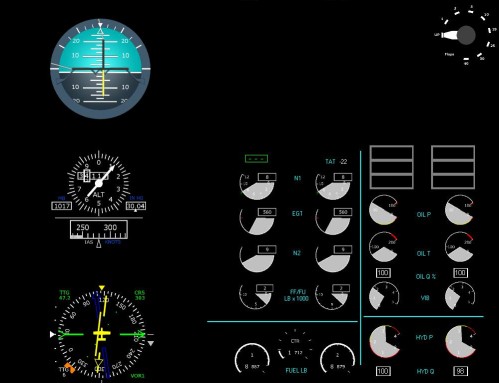
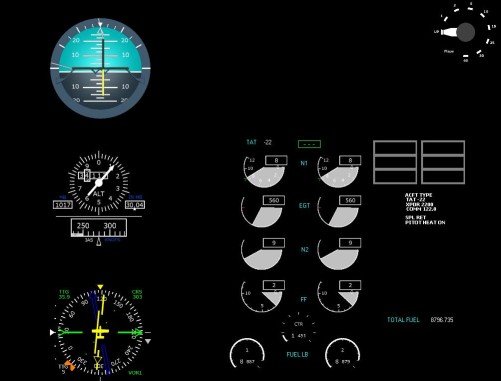
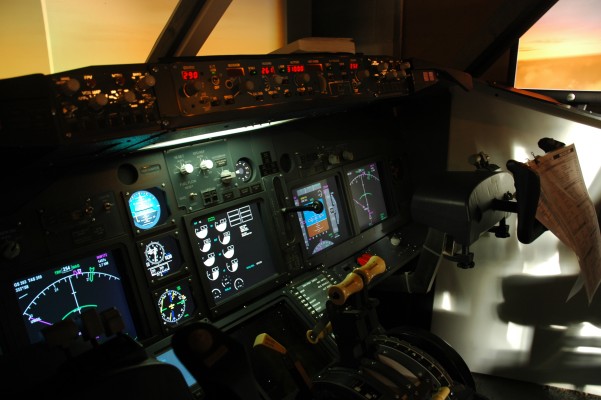
COMPUTER 2 (called EICAS) Runs
FsClient from www.flyware.nl
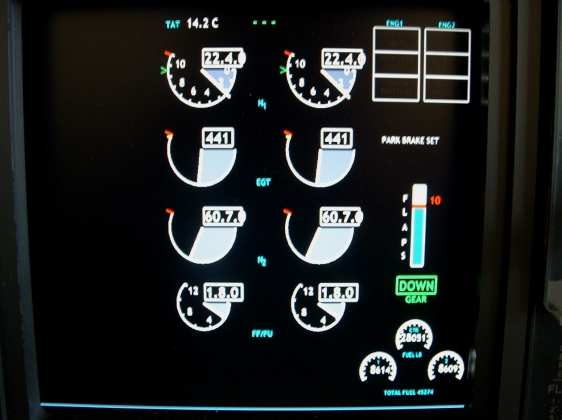
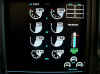
for the Centre Display. This gives me the EICAS engine
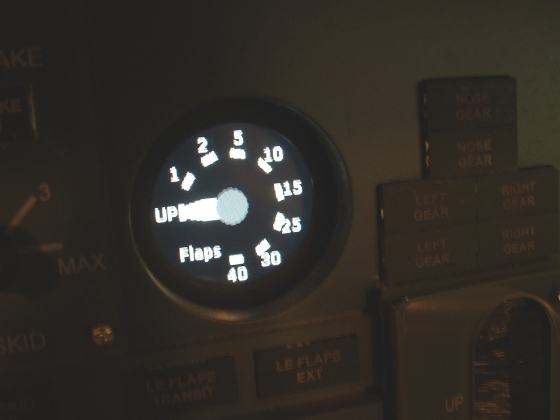
instruments (5 different screens) and the 3 working standby instruments
(HSI - AI
- Dual Boeing ASI/ALT). It also supplies me with other supplementary information, faithfully
re-creating the actual different 737NG EICAS screens.
DELL 17" Monitor
COMPUTER
3 (Called WideviewL). Runs FS2004 and Wideclient to give me
Capt. Forward Left and Left views.
COMPUTER 4 (Called WideviewR). Runs FS2004 and Wideclient to
give me F/O Front Right and Right views.
4 x DIGIMATE 20"
Widescreen TFT Monitors
COMPUTER 5 (Called
Services) runs Wideclient, Active Sky, Flight Deck Companion (for
background chatter only), Navigraph, & Squawkbox for online
flying.
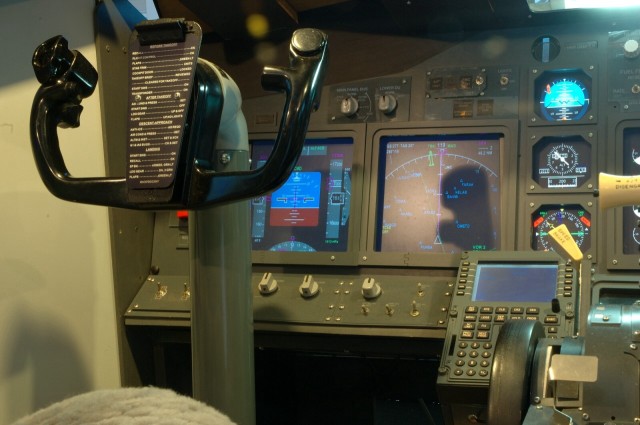
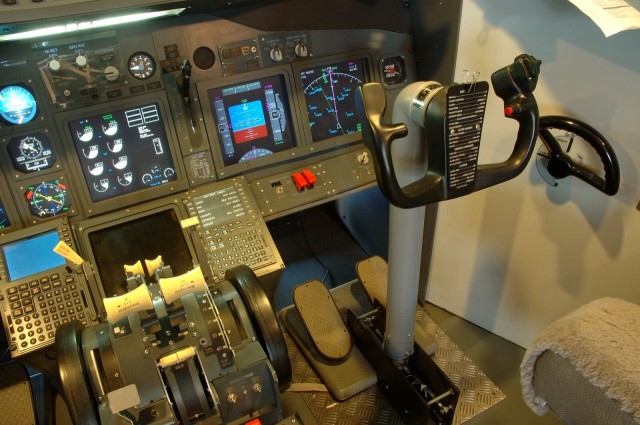
 Basic Flight Controls are Input
via One Custom Made Yoke which I bought from SimMotion
and One which I made myself. Both Yokes are connected to a single
BU0836 Joystick Controller using 4 of the 8 available Axes inputs.
Trim, Autopilot Disconnect and PTT buttons are all Basic Flight Controls are Input
via One Custom Made Yoke which I bought from SimMotion
and One which I made myself. Both Yokes are connected to a single
BU0836 Joystick Controller using 4 of the 8 available Axes inputs.
Trim, Autopilot Disconnect and PTT buttons are all  connected
to the same card and operational. connected
to the same card and operational.
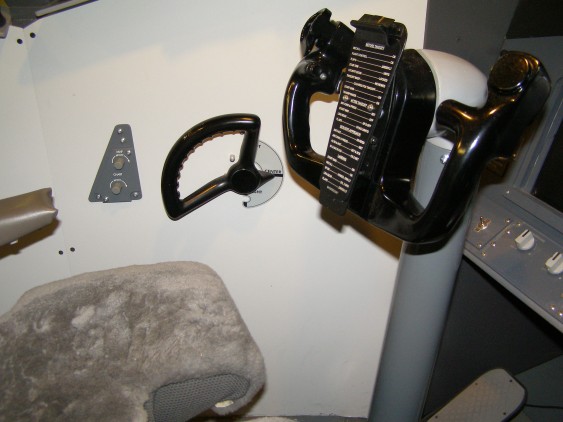
 On the left is the finished F/O Yoke and on the right is the 'How to
Do It' document.
On the left is the finished F/O Yoke and on the right is the 'How to
Do It' document.
The Rudder Pedals
for both sides are CH Products. These again have been directly
connected to the main computer and configured thru FS2004 and FSUIPC
to calibrate Yaw and Braking Functions.
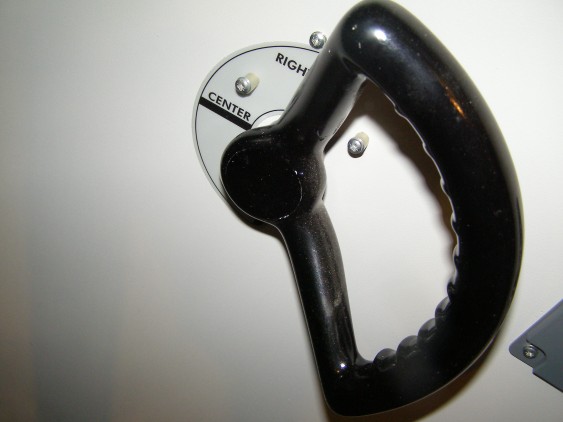
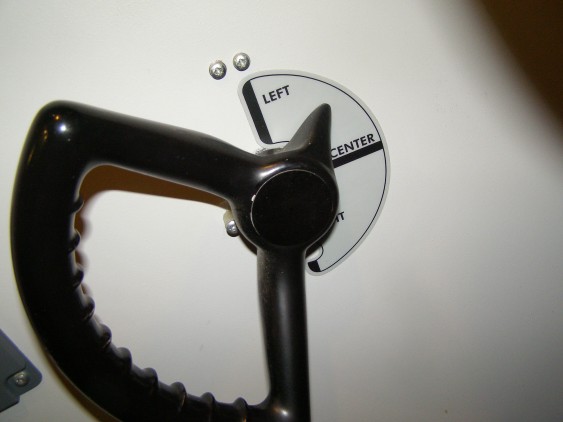
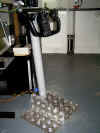
Both Pilots have a
STEERING TILLER
for Ground Handling. The Tiller themselves came from ROUTECH
and the Steering Indicator Plates I got from Marcus at LAUSITZ
AVIATION. These are basically a potentiometer mounted on a frame
and attached to the Tiller Handle with a piece of 8mm PVC air pipe and
pinned to prevent slippage. The Pots are connected to two more of the
Yoke BU0836 controller Axes and assigned in FSUIPC as Steering Tiller. 
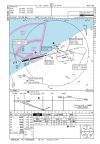 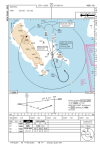
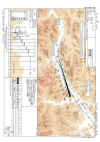
Visit Navigraph HERE
|
|
Automatic Flight is provided by
the excellent CPFlight MCP. By using the 737kbd file, it directly
commands the PMDG 737 when the Autopilot is engaged. 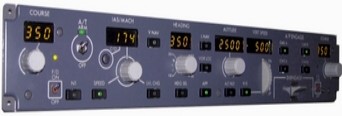
 Then
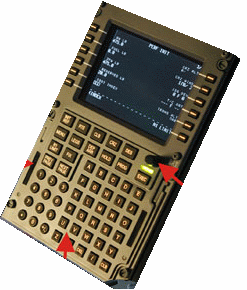
I also have the Superb Engravity CDU which faithfully replicates
the action of the PMDG Software CDU. When paired with the MCP, the LNAV and VNAV functions come into play
Automatically flying the pre-progammed flight right down to the
threshold on any commanded runway at any Airport in the Database. And
of course by keeping your Arrival/Departure Database upto date at the Navigraph site, the aircraft will also fly
current SID's and STAR's too ! Then
I also have the Superb Engravity CDU which faithfully replicates
the action of the PMDG Software CDU. When paired with the MCP, the LNAV and VNAV functions come into play
Automatically flying the pre-progammed flight right down to the
threshold on any commanded runway at any Airport in the Database. And
of course by keeping your Arrival/Departure Database upto date at the Navigraph site, the aircraft will also fly
current SID's and STAR's too !
 EXPANSION
BOARDS....I
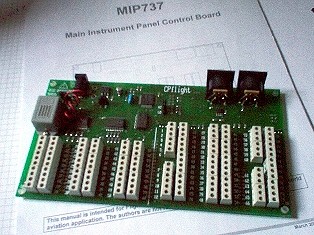
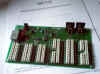
have the CPFlight MCPEX1 and the MIP737 expansions on-board. The
MIP737 takes care of all the annunciators on the MIP and also
allows me to Input the Exact position of the Autobrake. EXPANSION
BOARDS....I
have the CPFlight MCPEX1 and the MIP737 expansions on-board. The
MIP737 takes care of all the annunciators on the MIP and also
allows me to Input the Exact position of the Autobrake.
Power Supply.
I use stabilised 400w Power Supplies from ATX computers which
output both 5vdc (for annunciator lighting) and 12vdc (for
backlighting). A cheap, simple solution.
Power Switching. The
CPFlight MCPEX1 has 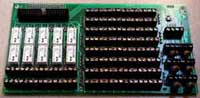 10 on-board switching relays which can be used
for turning on and off LED's or Low Current Indicators based on
'Stock/Standard' commands or you can write extras if you so
choose. I use 3
of these for the Red/Green Gear Travel (Red)
and the Down & Locked (Green)
Position Lights. A fourth powers my Parking Brake Set Indicator
and I use two to light the Spar Valve and Engine Valve
Annunciators on the overhead panel. 10 on-board switching relays which can be used
for turning on and off LED's or Low Current Indicators based on
'Stock/Standard' commands or you can write extras if you so
choose. I use 3
of these for the Red/Green Gear Travel (Red)
and the Down & Locked (Green)
Position Lights. A fourth powers my Parking Brake Set Indicator
and I use two to light the Spar Valve and Engine Valve
Annunciators on the overhead panel.
Systems Switching
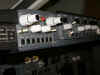
I also use the MCPEX1 to translate Toggle and Rotary Switch
Motions into commands which the PMDG 737 will respond to.
For example the Overhead Light Panel commands all the Lights
seperately and the APU and Jet Starter Switches are also wired
through the Board.
 Flight
Information is
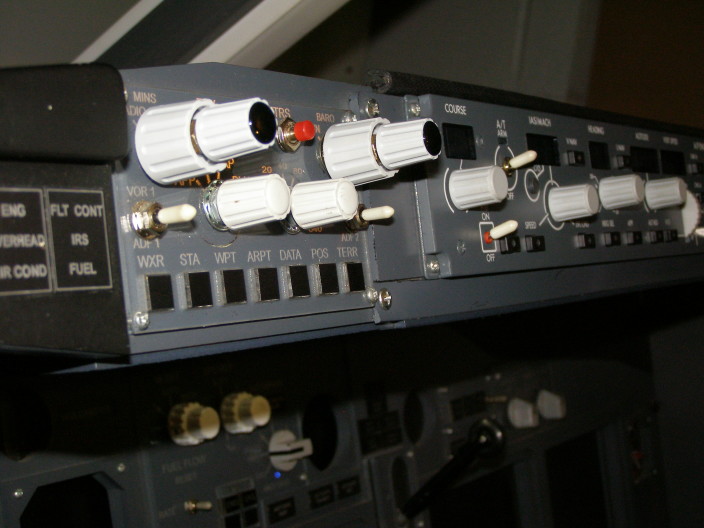
provided via the EFIS Panels. From here I can select to
display on the ND any thing I need to know. Plan, Map, Airports,
VOR's, Waypoints (and WP Data) I can also select which baro
setting to use, I can add Metres to the PFD Altitude Display and
set Std Pressure Setting. In fact anything that is available on
the PMDG software EFIS can be switched from here. Flight
Information is
provided via the EFIS Panels. From here I can select to
display on the ND any thing I need to know. Plan, Map, Airports,
VOR's, Waypoints (and WP Data) I can also select which baro
setting to use, I can add Metres to the PFD Altitude Display and
set Std Pressure Setting. In fact anything that is available on
the PMDG software EFIS can be switched from here.
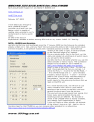 Obviously
things evolve and since the original photo that you see, I set
about upgrading the EFIS units given that Leo has now included
the ability to use rotary encoders with the BU0836 (and X)
cards. Obviously
things evolve and since the original photo that you see, I set
about upgrading the EFIS units given that Leo has now included
the ability to use rotary encoders with the BU0836 (and X)
cards.
On the right is the 'How To' document showing how you can build
your own EFIS unit at a fraction of the cost of buying one
commercially using components from OPENCOCKPITS
and the BU0836
board.
INSTRUMENTATION
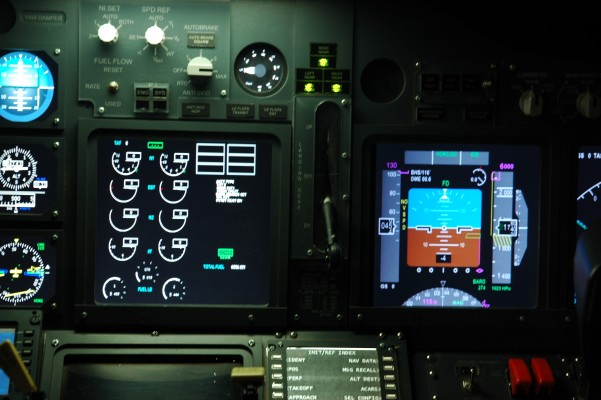
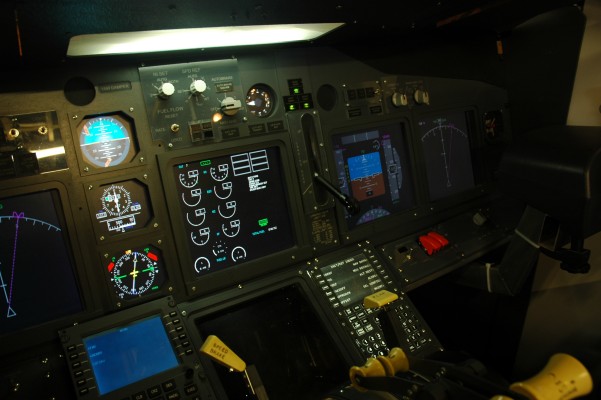
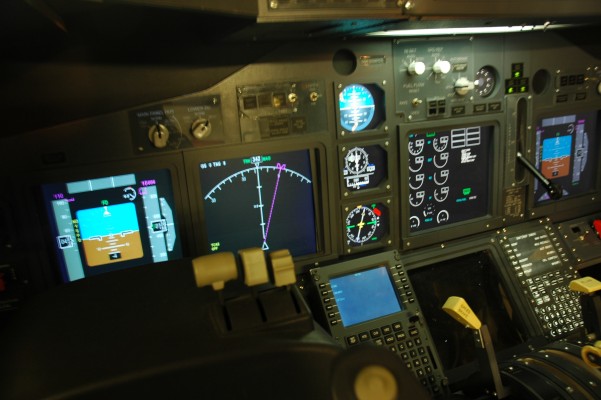
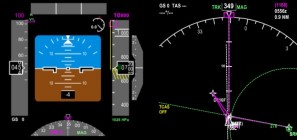
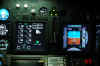
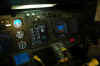
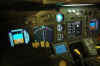
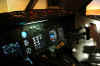
Now I have the 5 displays
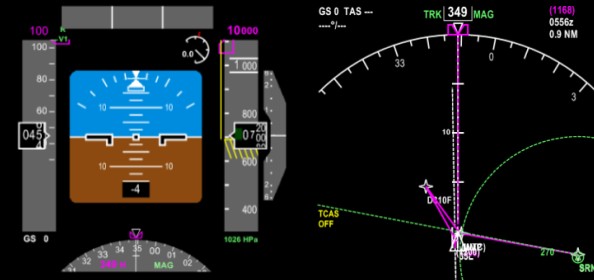
working. The PFD & ND are from the PMDG re-written
panel.cfg file.
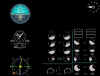 Then, I met a guy at the
IFC2005 exhibition, Gert Heijnis, who has provided the answer to my
Centre EICAS/Standby Instrument
problem. Check out
Then, I met a guy at the
IFC2005 exhibition, Gert Heijnis, who has provided the answer to my
Centre EICAS/Standby Instrument
problem. Check out 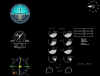 www.flyware.nl
. There is a great program called FsXpand which allows you
to assemble a panel of your choice and then configure it as you
need, using drag and drop, resizing and colour etc. www.flyware.nl
. There is a great program called FsXpand which allows you
to assemble a panel of your choice and then configure it as you
need, using drag and drop, resizing and colour etc.
|
|


 e-mail
us
e-mail
us 
 737NG.co.uk
- HOW IT's DONE
737NG.co.uk
- HOW IT's DONE